

Padagaya
Pinda Pradanam in Pithapuram
Sacred Ground of Ancestral Liberation
Perform Pinda Pradanam at Padagaya Pithapuram with experienced Vedic pandits. Book Shraddha, Tarpanam & Pitru Karma for ancestral peace and moksha.
Shraddha Tithi Calculator
Find Your Next Annual Shraddha Date
Know the correct annual Shraddha (Taddinam) date based on traditional Aparahna Tithi calculation followed at Padagaya.
Calculate Shraddha Date →Pinda Pradanam & Shraddha Seva in Pithapuram
Choose from authentic Pinda Pradanam, Shraddha, Tarpanam & Pitru Karma Seva performed by experienced Vedic priests in Pithapuram (Padagaya).
Pada Gaya Kshetram
Why Choose Padagaya for Ancestral Rituals?
Padagaya Temple in Pithapuram — also known as Dakshina Kashi — is one of India's most sacred kshetras for ancestral rituals. As the Pada Gaya Peetha of the holy Tri-Gaya Peethas, performing Pinda Pradanam, Shraddha Karma, and Tarpanam here grants departed souls immediate moksha, equivalent in merit to the rituals performed at Varanasi.
One of the Tri-Gaya Peethas
Padagaya is the sacred Pada Gaya (feet) of Gayasura, forming one of the three Tri-Gaya Peethas alongside Siro Gaya in Gaya, Bihar (head) and Nabhi Gaya in Jajpur, Odisha (navel). Together, these three kshetras represent the complete pitru karma circuit described in the Puranas.
Equal Merit to Kashi
The Skanda Purana (Bhima Kandam, Chapter 3) dedicates 36 shlokas to the glory of Pithapuram, explicitly stating that Pitru Karma performed here yields the same divine merit as rituals at Varanasi. This is why Pithapuram is revered as the Dakshina Kashi — the Kashi of South India.
Lord Vishnu's Sacred Footprints
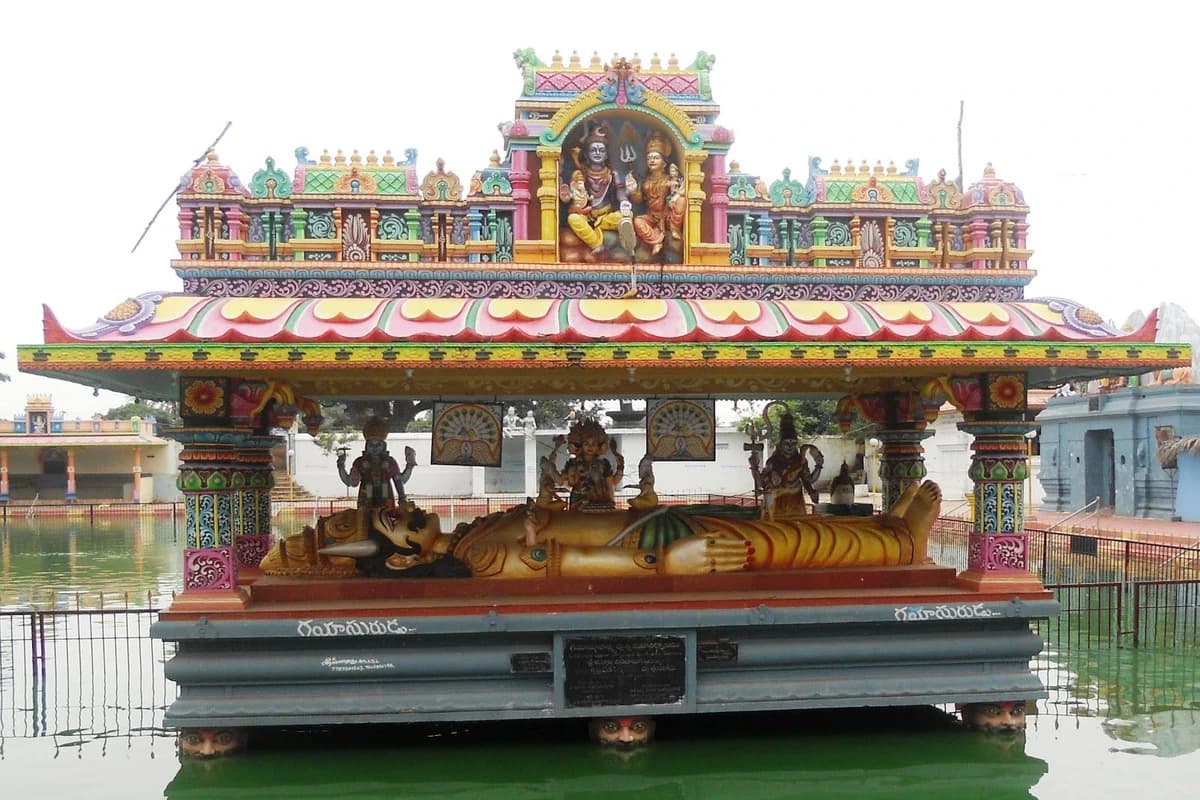
The Pada Gaya Sarovar within the Kukkuteswara Swamy Temple complex enshrines Lord Vishnu's sacred footprints (Vishnu Padam). According to Vedic tradition, offering Pindas at this divine pond ensures that ancestors receive moksha directly from Lord Vishnu and are liberated from the cycle of rebirth.
10,000+ Rituals by Coordinated Priests
Experienced Vedic priests coordinated by our platform have facilitated over 10,000 ancestral rituals for families across India and worldwide. Every ritual follows authentic Shastric procedures, with proper Sankalpa, Tarpana, and Pinda offering. NRI families can participate live via video call from anywhere in the world.
Independent Pilgrimage Facilitation
Gateway2Konaseema Services Private Limited
Padagaya Pithapuram is a private pilgrimage facilitation platform. We coordinate priest booking slots, guest rooms, taxi services, and temple guidance for devotees. We do not claim ownership, devasthanam affiliation, or control over Sri Kukkuteswara Swamy Temple or Sri Puruhutika Devi Temple.

Facilitation Center
Sri Kukkuteswara Swamy Temple Area
Spiritual Importance of Padagaya
The Ultimate Gateway to Ancestral Liberation and Peace

Dakshina Kashi: Pithapuram
Padagaya, located in the sacred town of Pithapuram, stands as one of the most revered Kshetras (holy places) in India. It is a sanctuary where devotion meets ancestral duty, drawing thousands of pilgrims seeking spiritual solace.
Known as the "Dakshina Kashi" (Varanasi of the South), performing rituals here is believed to yield merits equivalent to those performed in Gaya, Bihar. The spiritual vibrations of this land are said to pierce through the veils of the afterlife, delivering prayers directly to the Pitru Devatas.
The Legend of Gayasura
According to ancient Puranas, the powerful demon Gayasura performed intense penance and received a boon that his body would become the holiest of all entities. To stabilize the universe, the Holy Trinity performed a Yagna on his body.
When Gayasura's body was laid to rest, his head fell in Siro Gaya (Bihar), his navel in Nabhi Gaya (Odisha), and his feet rested in Pada Gaya (Pithapuram). Lord Vishnu's divine presence here makes it the ultimate destination for Pitru Moksha.

Shri Puruhutika Shaktipeeth
The Sacred 10th Shakti Peetha of Pithapuram
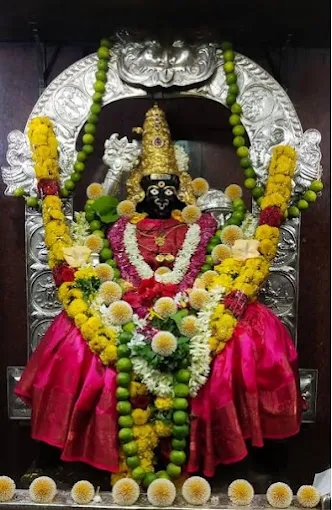
Pithapuram is home to the sacred Puruhutika Devi temple, one of the 18 Maha Shakti Peethas. According to ancient scriptures, when Lord Vishnu's Sudarshana Chakra dismembered the body of Goddess Sati, her left hand fell at this divine location in Pithapuram.
The presiding deity is Puruhutika Devi, and the Bhairava is Kukkuteswara. This makes Pithapuram not only a land of Pitru Moksha but also a powerful Shakti Kshetra, blessed by the divine feminine energy of the Goddess.

Sripada Srivallabha
The First Avatar of Lord Dattatreya in Kali Yuga
Sripada Srivallabha (1320–1351 CE) is revered as the first complete avatar of Lord Dattatreya in the Kali Yuga. Born in Pithapuram, Andhra Pradesh, to a devout Brahmin family, He exhibited divine powers from childhood. His life and miracles are chronicled in the sacred text 'Sripada Srivallabha Charitamrutam'. His birthplace in Pithapuram remains a major pilgrimage destination, attracting lakhs of devotees who seek His divine blessings.
Spiritual Benefits
The profound spiritual rewards of performing ancestral rites at Padagaya.
Ancestral Peace
Grants eternal peace and liberation to departed souls.
Karmic Cleansing
Clears past karmic debts and removes life obstacles.
Divine Protection
Invokes powerful blessings for the entire lineage.
Spiritual Growth
Elevates the spiritual consciousness of the performer.
Sacred Rituals
Essential ceremonies performed to honor and liberate ancestors.
Pinda Pradanam
The sacred offering of rice balls to ancestors, ensuring their souls attain peace and liberation in the afterlife.

Shraddha Karma
A deeply reverent ritual performed to pay homage to one's departed parents and forefathers.

Tarpanam
The holy offering of water mixed with sesame seeds to satisfy the thirst of ancestral spirits.
The Sacred Tri-Gaya Peethas
According to the Skanda Purana and Vayu Purana, the three Tri-Gaya Peethas represent the eternal body of the sacred demon Gayasura. These divine locations hold supreme importance for ancestral rites and Pitru Moksha: Gaya (The Head), Jajpur (The Navel), and Pithapuram (The Feet).
While Gaya embodies the spiritual head and Jajpur (Nabhi Gaya) the divine navel, Pithapuram (Pada Gaya) represents the sacred feet. Completing Pinda Pradanam, Shraddha, and Tarpanam at Padagaya is considered the ultimate dharma and ultimate culmination of one's Pitru Rin, sealing the ancestral soul's journey to eternal Moksha and ensuring divine blessings for seven generations of the family.
Frequently Asked Questions
Find answers to common questions about the sacred rituals and Padagaya.
Honor Your Ancestors
Take the sacred step towards fulfilling your spiritual duties. Book your ritual at Padagaya today and ensure eternal peace for your lineage.
Book Your RitualAncient Legend
The Legend of Gayasura & the Origin of Padagaya
In the Treta Yuga, a mighty demon named Gayasura performed an extraordinary penance that made him so powerful that even the Devas could not defeat him. His body had become so purified by austerities that anyone who touched him was immediately liberated from all sins.
To preserve the cosmic order of karma, Lord Brahma, Lord Vishnu, and Lord Shiva (the Holy Trinity) devised a plan. They requested Gayasura to lie face down so they could perform a great Yagna on his body. When the demon agreed, Lord Vishnu placed His divine foot (pada) on Gayasura's feet at Pithapuram, Lord Shiva took His Kukkuteswara (rooster) form to pin him down, and the cosmic sacrifice was performed.
Gayasura's immense body became sanctified at three divine points: his head (Sira Gaya) at Gaya in Bihar, his navel (Nabhi Gaya) at Jajpur in Odisha, and his feet (Pada Gaya) here in Pithapuram. This is why Pinda Pradanam performed at Padagaya grants the same moksha as at Gaya Bihar — the divine energy of all three Tri-Gaya Peethas flows through this sacred land.
Tri-Gaya Peethas
Sacred Kshetra
Padagaya Pithapuram — The Dakshina Kashi of South India
Pithapuram is not just a temple town — it is a convergence of divine energies across multiple traditions. This ancient kshetra holds sacred significance in Shaivism, Vaishnavism, Shaktism, and the Datta tradition, making it one of the most spiritually dense locations in all of South India.
Kukkuteswara Swamy Temple
The presiding deity of Pithapuram is Lord Shiva as Kukkuteswara Swamy — the divine rooster form He assumed to pin down Gayasura. The Swayambhu Linga here is uniquely shaped like a rooster (kukkuta), a sight found nowhere else in India.
Puruhutika Devi — 10th Shakti Peetham
Pithapuram is home to Puruhutika Devi, the 10th of the 18 Maha Shakti Peethas in the Ashtadasha Peethas tradition. It is believed that a part of Sati Devi's body fell here, making this one of the most powerful goddess shrines in peninsular India.
Pada Gaya Sarovar
The sacred tank within the Kukkuteswara Swamy complex houses Lord Vishnu's divine footprints (Vishnu Padam). Offering Pindas and performing Tarpanam in this pond is believed to wash away the sins of 21 generations and grant liberation to all departed ancestors.
Sripada Srivallabha — First Datta Avatar
Pithapuram is the birthplace of Sripada Srivallabha, the first incarnation of Lord Dattatreya, born here in 1326 AD. The Sripada Srivallabha temple at Pithapuram draws thousands of Datta devotees and is considered an extraordinarily powerful divya kshetra.
Kunti Madhava Temple
One of the Pancha Madhava (five Vishnu) temples of the region, the Kunti Madhava Temple at Pithapuram is associated with the Mahabharata. Kunti, mother of the Pandavas, is said to have worshipped Lord Vishnu here, lending this temple immense Puranic significance.
Mentioned in Skanda Purana
The glory of Pithapuram is described in the Skanda Purana (Bhima Kandam, Chapter 3) across 36 dedicated shlokas. The Purana explicitly states that Pitru Karma performed here grants moksha equivalent to Varanasi, Gaya, and Prayag — making it a Trikona Kshetra.
Sacred Services at Padagaya
Every ritual at Padagaya is performed with complete Vedic authenticity, using proper samagri, mantras, and the blessings of the Pada Gaya Kshetram.
How to Plan Your Pilgrimage to Padagaya Pithapuram
Pithapuram is well connected and easy to reach from all major cities. Most devotees combine their ritual visit with a temple tour of the surrounding sacred sites.
How to Reach Pithapuram
By Train
Pithapuram Railway Station is on the Howrah–Chennai main line. Direct trains from Hyderabad, Vijayawada, Visakhapatnam, and Chennai stop here regularly.
By Air
Nearest airport: Rajahmundry (62 km). Also accessible via Visakhapatnam Airport (160 km). Both have taxi services and car rentals available.
By Road
21 km from Kakinada · 12 km from Samarlakota · 28 km from Annavaram · 290 km from Hyderabad. State and private buses are frequent from Kakinada and Rajahmundry.
Best Time to Visit
Pitru Paksha (Sep–Oct): Most auspicious 15-day period for all ancestral rituals. Mahalaya Amavasya is the most powerful day of the year.
Amavasya (Monthly): Every new moon day is ideal for Tarpanam and Shraddha Karma. Draws large numbers of devotees.
Death Anniversary (Tithi): The annual tithi of the departed loved one is the most personally powerful day for Pinda Pradanam.
All Year Round: Padagaya is open for rituals 365 days. Kukkuteswara Swamy Temple is open Morning: 5:00 AM–12:30 PM and Evening: 4:00 PM–8:30 PM.
Kukkuteswara Swamy Temple Timings
Pournami (Full Moon) Special Poojas
Chandi Homam: 9:00 AM – 11:00 AM
Siva Kalyanam: 6:00 PM – 8:30 PM
Stay Near the Temple
Padagaya offers clean, affordable AC and Non-AC accommodation walking distance from the Kukkuteswara Swamy Temple. Perfect for devotees who wish to attend early morning rituals.
Room Booking →Padagaya Pithapuram — Trusted by 10,000+ Families Across India & the World
From families in Andhra Pradesh and Telangana to NRI devotees in the USA, UK, Australia, Canada, and Singapore — Padagaya has become the most trusted name for authentic ancestral rituals in South India. Every booking receives personalised attention, proper documentation, and a live video of the complete ritual.
10,000+
Rituals Completed
500+
NRI Families Served
15+
Verified Vedic Priests
365
Days Available
Devotee Experiences
Words of Gratitude
Read how our dedicated services have helped families find peace and fulfill their sacred duties to their ancestors.
"Performing Pinda Pradanam for my late father at Padagaya was a deeply moving experience. The priests were incredibly knowledgeable and guided us through every step with immense patience and devotion."
"Living in the US, I was worried about how to perform the annual Shraddha for my ancestors. The online remote service provided by this team was seamless, authentic, and brought our family immense peace of mind."
"The arrangements at Pithapuram were flawless. From the moment we arrived, everything including the puja samagri was taken care of. We truly felt the divine presence during the rituals."
Frequently Asked Questions — Temple Timings
Everything you need to know before visiting Kukkuteswara Swamy Temple in Pithapuram.
What are the Kukkuteswara Swamy Temple opening hours?
The temple is open in the morning from 5:00 AM to 12:30 PM and in the evening from 4:00 PM to 8:30 PM, every day of the year including public holidays.
What time is Abhishekam performed at Kukkuteswara Swamy Temple?
The daily Abhishekam begins at 5:00 AM sharp. It is the most sacred slot of the day and we recommend arriving a few minutes early to participate fully.
When is the best time to perform Pinda Pradanam or Shraddha rituals?
Rituals are performed throughout the day during temple hours. The morning session (5:00 AM–12:30 PM) is preferred for Pitru karma. Amavasya (new moon) days and the 15-day Pitru Paksha window (Sep–Oct) are especially auspicious.
Is Kumkum Archana available every day?
Yes, Kumkum Archana is available during regular temple hours — both the morning session (5:00 AM–12:30 PM) and the evening session (4:00 PM–8:30 PM).
What special poojas are performed on Pournami (Full Moon) days?
On every Pournami (Full Moon) day, the temple conducts Chandi Homam from 9:00 AM to 11:00 AM and Siva Kalyanam from 6:00 PM to 8:30 PM. These are deeply auspicious events attended by hundreds of devotees.
Can I book rituals online and arrive later in the day?
Yes. After booking online, our team will confirm a preferred time slot. Both morning and evening sessions are available. NRI families can also opt for a live video of the ritual performed on their behalf.
Common Questions
Padagaya Pithapuram – Frequently Asked Questions
What is Padagaya Pithapuram?
Padagaya Pithapuram is the sacred Pada Gaya Kshetram located in Pithapuram, East Godavari district, Andhra Pradesh. It is one of the three holiest places in India for ancestral liberation — alongside Gaya in Bihar and Puri in Odisha. Lord Vishnu's divine footprint (paduka) is enshrined here at the Pada Gaya Sarovar, making Padagaya Pithapuram the most sacred destination for Pinda Pradanam and Pitru Karma in South India.
Why is Pithapuram famous for Padagaya?
Pithapuram is famous as Padagaya because it is where the feet (pada) of the demon Gayasura rested when the Holy Trinity performed the cosmic Yagna on his body. This makes Pithapuram one of the Tri-Gaya Peethas — Pada Gaya (Pithapuram, Andhra Pradesh), Siro Gaya (Gaya, Bihar), and Nabhi Gaya (Jajpur, Odisha). Pinda Pradanam performed at Padagaya Pithapuram is said to grant Pitru Moksha equal in power to that performed at the original Gaya in Bihar.
How to perform Pinda Pradanam in Pithapuram?
To perform Pinda Pradanam at Padagaya Pithapuram, arrive at the Pada Gaya Sarovar between 5:30 AM and 8:00 AM with your family gotra details, names and nakshatra of departed ancestors, and ritual samagri including rice, sesame seeds, and sacred thread. Our Vedic priests at Padagaya Pithapuram guide families through the complete ritual according to the Apastamba Sutra tradition. NRI families can book remote Pinda Pradanam services via WhatsApp at +91 99491 65556.
Sacred Heritage
Padagaya Pithapuram – Sacred Place for Pinda Pradanam
Padagaya Pithapuram is one of the most sacred pilgrimage destinations in India for performing ancestral liberation rituals. Located in the holy town of Pithapuram, Andhra Pradesh, Padagaya Pithapuram is revered as Pada Gaya — the place where the divine feet of Gayasura rested when the Holy Trinity performed the cosmic Yagna. Just as Gaya in Bihar grants liberation to ancestors through Pinda Pradanam, Padagaya Pithapuram carries the same sacred power in South India, making it the most accessible Gaya Kshetram for Telugu, Tamil, and Kannada devotees.
The primary ritual performed at Padagaya Pithapuram is Pinda Pradanam — the sacred offering of rice balls to nourish and liberate the souls of departed ancestors. Alongside Pinda Pradanam, devotees perform Shraddha Karma, Tarpanam, and Narayana Bali Puja at the banks of the Pada Gaya Sarovar. These rituals, when performed at Padagaya in Pithapuram, are said to carry ten times the spiritual merit of those performed at ordinary kshetras. The sacred water of the Pada Gaya Sarovar, touched by the divine feet of Lord Vishnu, purifies the ritual offerings and ensures the liberation of the ancestor's soul.
We provide pilgrim facilitation services at Padagaya Pithapuram in East Godavari, Andhra Pradesh. Vedic priests coordinated by our platform, trained in the Apastamba Sutra tradition of Andhra Pradesh, perform every ritual — Pinda Pradanam, Shraddha Karma, Tarpanam, and Narayana Bali Puja — with complete Vedic procedure. Families across India and NRI devotees worldwide trust Pithapuram Padagaya for performing their Pitru Karma with authenticity and devotion. Learn more about Padagaya Pithapuram rituals or read about Pithapuram on Wikipedia to understand the ancient spiritual history of this sacred kshetra.